Tyre Rubber online shopping search
Simply find the best possible online shopping Tyre Rubber deals
Tyre Rubber shopping marketplace results
Shop Tyre Rubber products and compare prices and listings on popular online marketplaces.
Tyre Rubber video reviews
Tyre Rubber news
Tyre Rubber - BingNovice
How Are MotoGP™ Tyres Designed? Inside MotoGP's Race Rubber
MotoGP™ tyres are designed and constructed to perform optimally in extremely intense 45-minute races at speeds exceeding 360km/h. During this time the tyres will cover from 110km to 120km, being pushed to the limit under the massive acceleration and braking forces produced by the hugely powerful 1000cc MotoGP™ prototype motorcycles being ridden by the best riders on the planet.
Beneath the specially designed outer rubber compounds are inner layers which feature materials such as nylon, polyester, or aramid, supported by textile cords and even steel. The tyres in MotoGP vary in specific characteristics depending on the circuit and rider requirement at each Grand Prix, offering a range of softness/hardness and durability.
MotoGP tyre design means that some tyres used in Grand Prix racing even feature an asymmetrical design, meaning they can handle more pressure on their left or right side, which helps with performance on tracks where the riders lean either predominantly left or right.
MotoGP tyres are designed to provide maximum grip at lean angles of up to 64 degrees, working across track surface temperatures ranging from 10°C in autumn at Phillip Island,…
Why Do MotoGP™ Bikes Use Slick Tyres? The Science Behind Racing Rubber
MotoGP™ slick tyres are completely smooth and are designed to perform optimally in dry conditions. They don't have any tread or grooves on them, which, contrary to intuition, means they actually provide more grip than grooved tyres, when used in the correct context and circumstances.
On a road bike, a smooth, bald tyre would be considered dangerously worn out. So why are the fastest racing motorcycles on the planet - machines capable of exceeding 360km/h - deliberately equipped with tyres with no tread at all?
The answer may seem counterintuitive, but it’s all about the key element of ‘grip’. The typical grooves in the tyres on road bikes actually take away some of the surface area that would otherwise be in contact with the road. A race tyre doesn't have these grooves, which increases the ‘contact patch’ between the tyre and the road, which in turn gives more slick tyre grip, allowing the rider to go faster.
The riders in MotoGP do not race with slick tyres in fully wet conditions. They instead race with grooved MotoGP rain tyres (known informally as ‘wet tyres’), which more closely resemble the typical tyre…
Schwalbe’s new tyre will keep rubber out of landfill
In a first for the cycling industry, Schwalbe is set to release a tyre made from recycled tyres.
The ‘Schwalbe Recycling System’ was first demonstrated at Eurobike last year. The tyre brand partnered with recycling technology company Pyrum Innovations to build a recycling process at dealership level.
Pyrum uses a two-step process to separate rubber, textile fibres and steel to produce rubber granules.
Schwalbe has taken deliveries of rubber granules, which it plans to use in an upcoming recycled tyre.
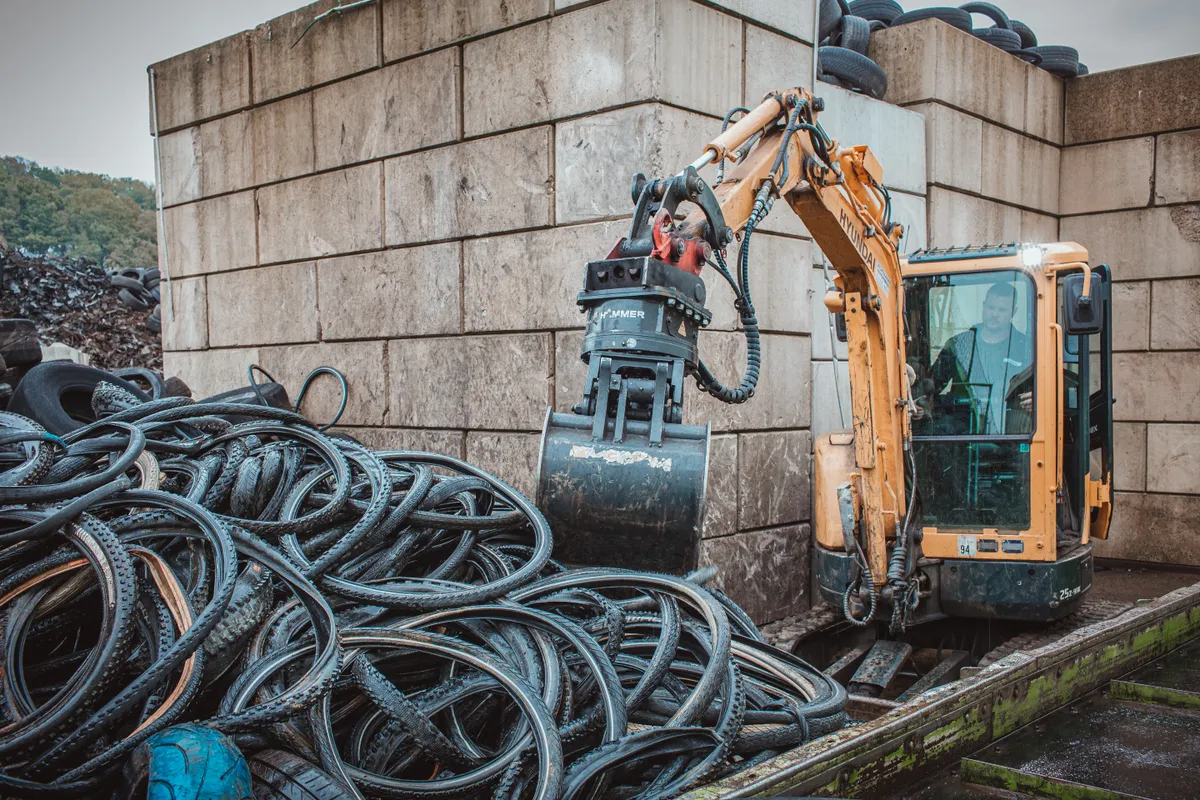 Schwalbe transports the tyres from partners to Pyrum. - Schwalbe
Schwalbe says its recycling process causes an 80 per cent reduction in the amount of carbon dioxide released in the production of a new tyre.
It is not known whether the recycling scheme extends to tyres from other manufacturers, though the process doesn’t seem to be limited to Schwalbe's rubber compound.
Schwalbe says 400,000 tyres had been recycled as of December 2022, with the new recycled tyre to be unveiled in June 2023
Tyre recycling process
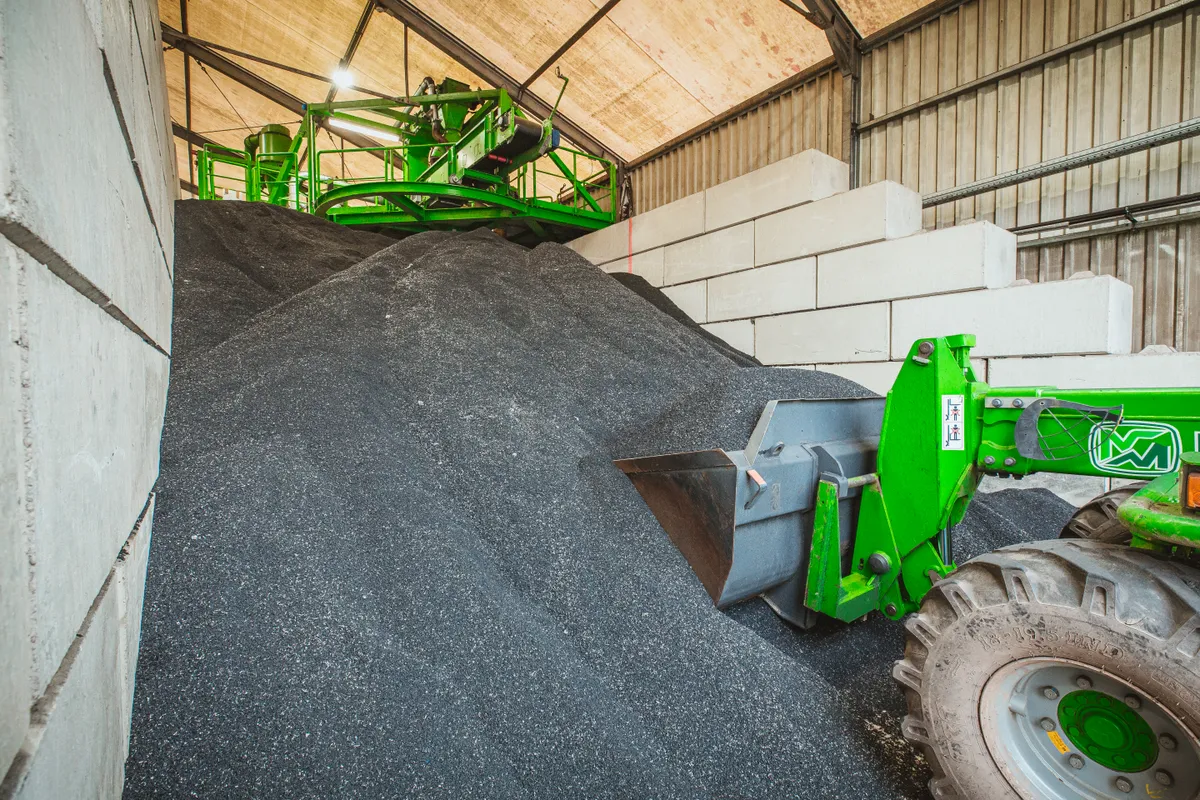 Rubber granules are used in the construction of new tyres. - Schwalbe
Schwalbe has partnered with Pyrum Innovations to supply recycled carbon black, a compound used in the production of tyres.
Pyrum’s two-step…